
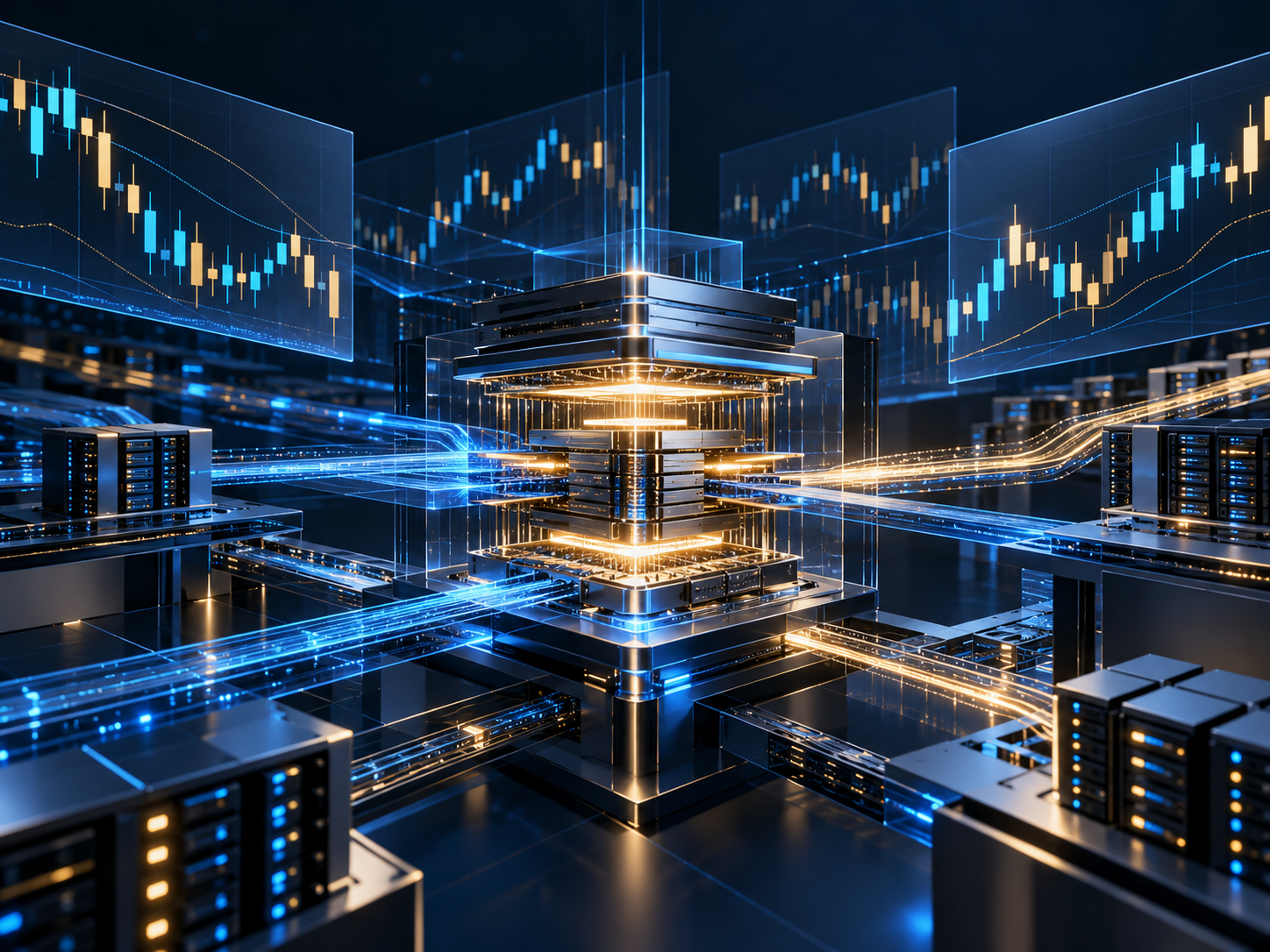
The technology and engineering principles behind modern, high-performance trading platforms.
A modern trading platform makes complex financial operations appear simple. Users monitor live prices, analyse charts, place orders and receive confirmations within seconds.
Behind every interaction, however, multiple systems must work together to process market data, validate transactions, manage risk and communicate with brokers or exchanges.
Building a successful trading platform is not just about speed or an attractive interface. It is about creating a secure, reliable and scalable financial environment that users can trust.
Real-Time Market Data: Accuracy Matters as Much as Speed
Financial markets generate enormous volumes of information. Prices, trading volumes and market movements arrive continuously from exchanges and data providers.
A trading platform must process these updates efficiently while ensuring that users receive accurate and consistent information.
This requires more than fast communication. A robust architecture must detect delayed prices, handle missing updates, validate incoming data and recover gracefully when a provider becomes unavailable.
Technologies such as WebSockets, streaming services and in-memory processing can enable responsive market interfaces.
However, real-time data is valuable only when users can trust its accuracy and freshness.
Reliable Order Execution: Every Transaction Counts
Order management is one of the most critical components of any trading platform.
When a user submits an order, the system must validate the request, check trading limits, communicate with the execution provider and accurately track the order's status.
Consider a common scenario: a user submits an order, but the network connection is interrupted before confirmation arrives.
Was the order executed? Was it rejected? Should the system retry?
Without proper safeguards, such situations can result in duplicate orders or incorrect account information.
A well-designed Order Management System (OMS) addresses these challenges through transaction identifiers, controlled retries, reliable event processing and complete audit trails.
In financial software, knowing exactly what happened is just as important as making it happen quickly.
Performance Under Pressure
A trading platform may perform perfectly during normal market conditions but struggle when trading activity suddenly increases.
Periods of market volatility can generate substantial spikes in price updates, user requests and order submissions.
This makes scalability and predictable performance essential.
Modern platforms benefit from architectures that separate market data processing, order management, portfolio services and analytics. Each component can then be monitored and scaled according to its workload.
Performance engineering should focus on measurable indicators such as response times, transaction throughput, system availability and recovery time.
The objective is not simply to achieve impressive benchmark results.
It is to deliver consistent performance when users need the platform most.
Security and Operational Control by Design
Trading platforms handle sensitive financial information and potentially high-value transactions.
Security therefore needs to be embedded into the architecture from the beginning.
Strong authentication, encryption, role-based permissions and secure API integrations are fundamental requirements.
Equally important are transaction auditing, monitoring, controlled deployments and recovery procedures.
Financial systems must also be designed to handle unexpected events without compromising transaction integrity.
For example, when communication with a broker fails, the platform should preserve the last confirmed order state and reconcile outstanding transactions when connectivity is restored.
These capabilities create the operational resilience required for dependable financial services.
Turning Trading Data into Valuable Insights
A trading platform generates much more than transaction records.
Market data, execution history, portfolio information and operational metrics create opportunities for advanced analytics.
A well-designed data infrastructure can support:
-
Portfolio analytics: Monitoring positions, exposure, performance and historical trends.
-
Execution analysis: Evaluating order processing times, execution quality and transaction costs.
-
Risk monitoring: Identifying concentrations, unusual activity and changing market exposure.
-
Operational intelligence: Detecting performance bottlenecks, integration failures and recurring system issues.
AI-powered analytics can further enhance these capabilities by helping users investigate complex information, identify patterns and receive clearer explanations of operational or financial events.
The opportunity is to move beyond processing trades and create a platform that delivers meaningful intelligence.
The User Experience Makes the Difference
Behind every sophisticated trading system is a user who expects clarity and simplicity.
Live charts, intuitive order tickets, transparent transaction costs and accurate status notifications are essential elements of a successful interface.
Users should always understand whether an order has been submitted, accepted, partially executed or completed.
Modern web and mobile technologies make it possible to deliver rich, responsive experiences without exposing the technical complexity behind them.
The best trading interfaces make sophisticated technology feel effortless while keeping important financial information visible and understandable.
Building the Right Platform for the Business
Not every trading platform has the same requirements.
A retail investment application, an institutional trading system and a specialised financial analytics platform may share common components, but their priorities differ significantly.
Successful development starts with understanding the business model, expected transaction volumes, execution requirements, user workflows and regulatory responsibilities.
A modular architecture allows organisations to introduce functionality incrementally, integrate with existing brokers and financial services, and expand as business needs evolve.
More importantly, it avoids unnecessary complexity while preserving the flexibility required for future growth.
Final Thoughts: Engineering Trust into Financial Technology
Building a high-performance trading platform requires more than selecting modern technologies.
It demands a deep understanding of financial processes, real-time data management, transaction integrity, security and operational resilience.
The strongest platforms combine these engineering principles with an intuitive user experience and the ability to evolve as markets and business requirements change.
Ultimately, performance is not measured only in milliseconds. It is measured in reliability, accuracy and the confidence users have in every transaction.
That is what transforms a trading application into a dependable financial technology platform.


0 Comments